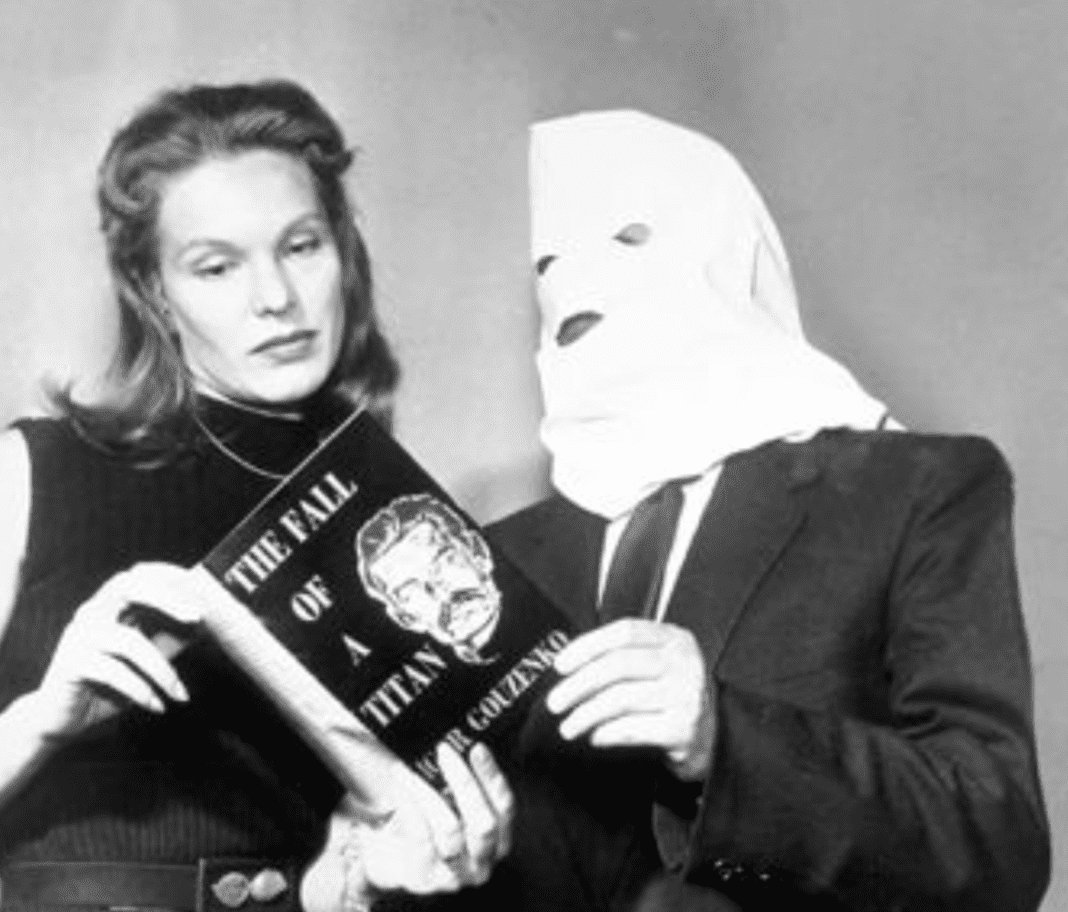

During World War II, Canada was part of the anti-Hitler coalition. Opponents of Hitler’s Germany included Great Britain, the United States, China, and, from 1941 onward, the USSR. After the end of World War II, a major investigation called “the Gouzenko Affair” began in Canada’s capital. Its objective on Canadian soil was to expose an entire network of communist spies in Canada. This was tied to the fact that the USSR was never truly an ally. The Soviet leadership had its own ambitions for achieving global dominance. Read more at ottawayes.com.
The Story of Russian Igor Gouzenko in Ottawa
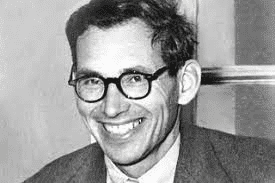
Igor Gouzenko lived and worked in the USSR, serving as a cryptographer. Shortly after World War II, the Russian Gouzenko decided to flee the Soviet Union for Ottawa. He took more than 100 secret documents with him, proving that Canada had long harbored a communist spy network gathering information for Moscow.
Such a statement in 1945 placed Canada on the brink of an international crisis, because among the recruited Soviet spies were actual Canadians holding high-ranking positions in various state structures. They had access to different kinds of information:
- military
- scientific
- diplomatic
- classified intelligence
- research on cracking diverse codes
- radar-related studies
- other areas
These communist Canadian spies passed on information to the Soviet government both during and after World War II. This proved that the Soviet Union was not a real ally of the anti-Hitler coalition but was instead pursuing its own global-dominance strategy.
Investigation of the “Gouzenko Affair” and Evidence of Communists in Canada
A special commission was established in Ottawa to investigate and prove the existence of a Soviet spy network in Canada. The Ottawa commission began its work only in 1946, led by two Supreme Court justices of Canada, and included Ottawa lawyers.
The commission worked intensively to uncover any proof that the Soviet spy network existed on Canadian soil. In due course, they found it. Altogether, 21 Canadian residents were discovered to have been recruited by communists. They received no fewer than 11 indictments under wartime regulations.
Those accused of spying included such high-level Canadians as Members of Parliament, captains in the Canadian Army, leaders of local parties, Canadian chemists, geologists, physicists, engineers, electricians, physicians, secretaries of state, and one cryptographer.
All of these individuals were secretly arrested and denied any form of legal assistance under wartime emergency measures. Subsequently, a special defense commission was established for the detainees. Throughout Canada’s history, this arrest constituted the largest infringement of human rights during peacetime.
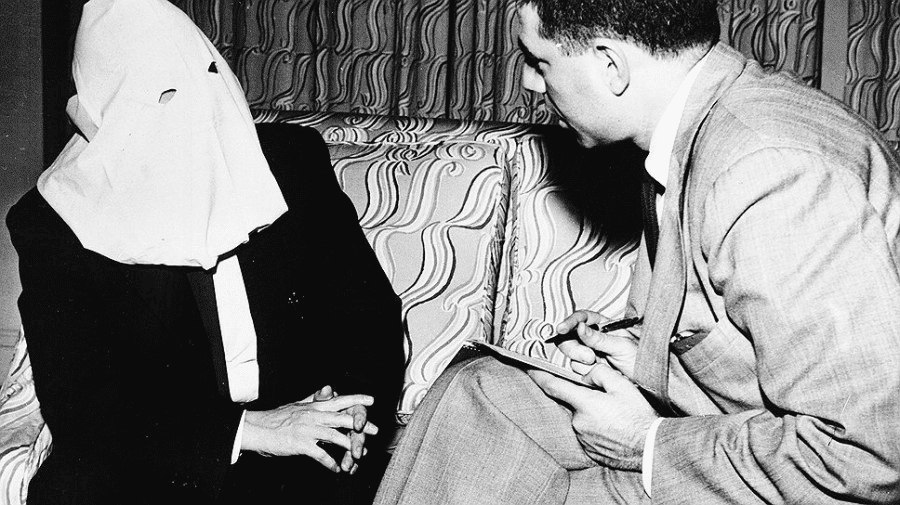
Beginning in 1945, Igor Gouzenko did not appear in public in Ottawa or grant interviews. For the first time since his arrival in Ottawa, Gouzenko took part in a CBC TV show in 1966 as a hidden guest. For his safety, he wore a white mask with openings for his eyes. In fact, he wore it nearly the entire time he stayed in Canada’s capital. During the show, Gouzenko spoke about what the Soviet Union was really like and made a statement that the MI5 officer Hollis—who had interrogated Gouzenko in 1945 when he fled the USSR—was in fact their spy.
All of Igor Gouzenko’s evidence, which he handed over to the Canadian government in 1945, spanned more than 6,000 pages. It became publicly available for the first time in the early 1980s.