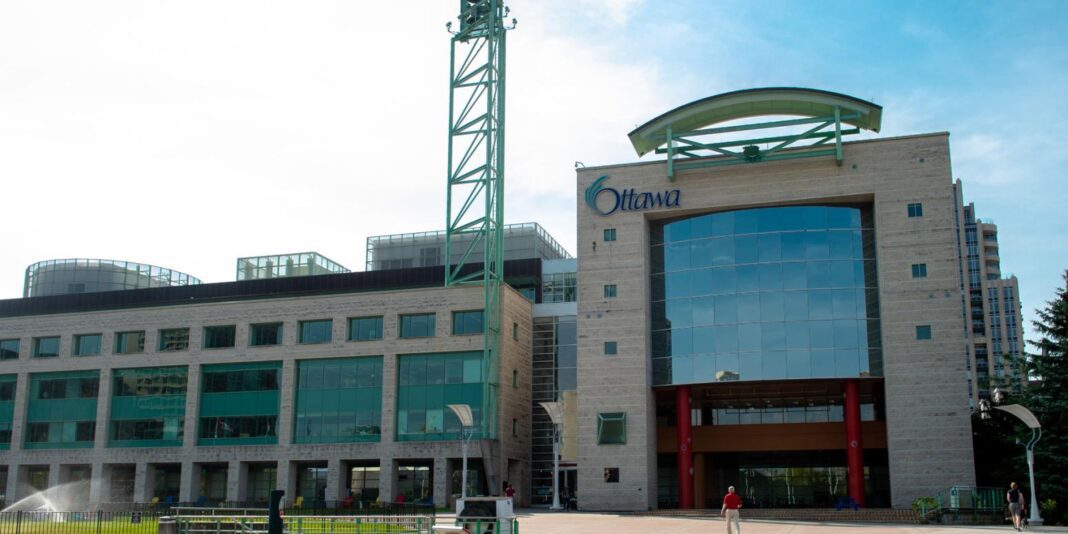

In the heart of the city lies Ottawa City Hall, which consists of two connected buildings. This combination of past and present reflects the city’s evolution. Ottawa Yes provides more insight into the current city hall.
Main Building
The Ottawa City Hall complex comprises a modern wing located on Laurier Avenue and a 19th-century heritage wing on Elgin Street. Despite the city hall’s facade facing two major streets, the main entrance is situated on Laurier Avenue. The municipal address of Ottawa City Hall is 110 Laurier Avenue West.
It is worth highlighting the modern wing, which serves as the main section of city hall. Designed by Canadian architect Raymond Moriyama, the building reflects a commitment to humanistic architecture and democratic ideals. Moriyama, together with Ted Teshima, co-founded the Toronto-based architectural firm “Moriyama & Teshima Architects.” Their firm was responsible for many renowned projects, including Ottawa City Hall, the Canadian War Museum, and the Canadian Embassy in Tokyo.
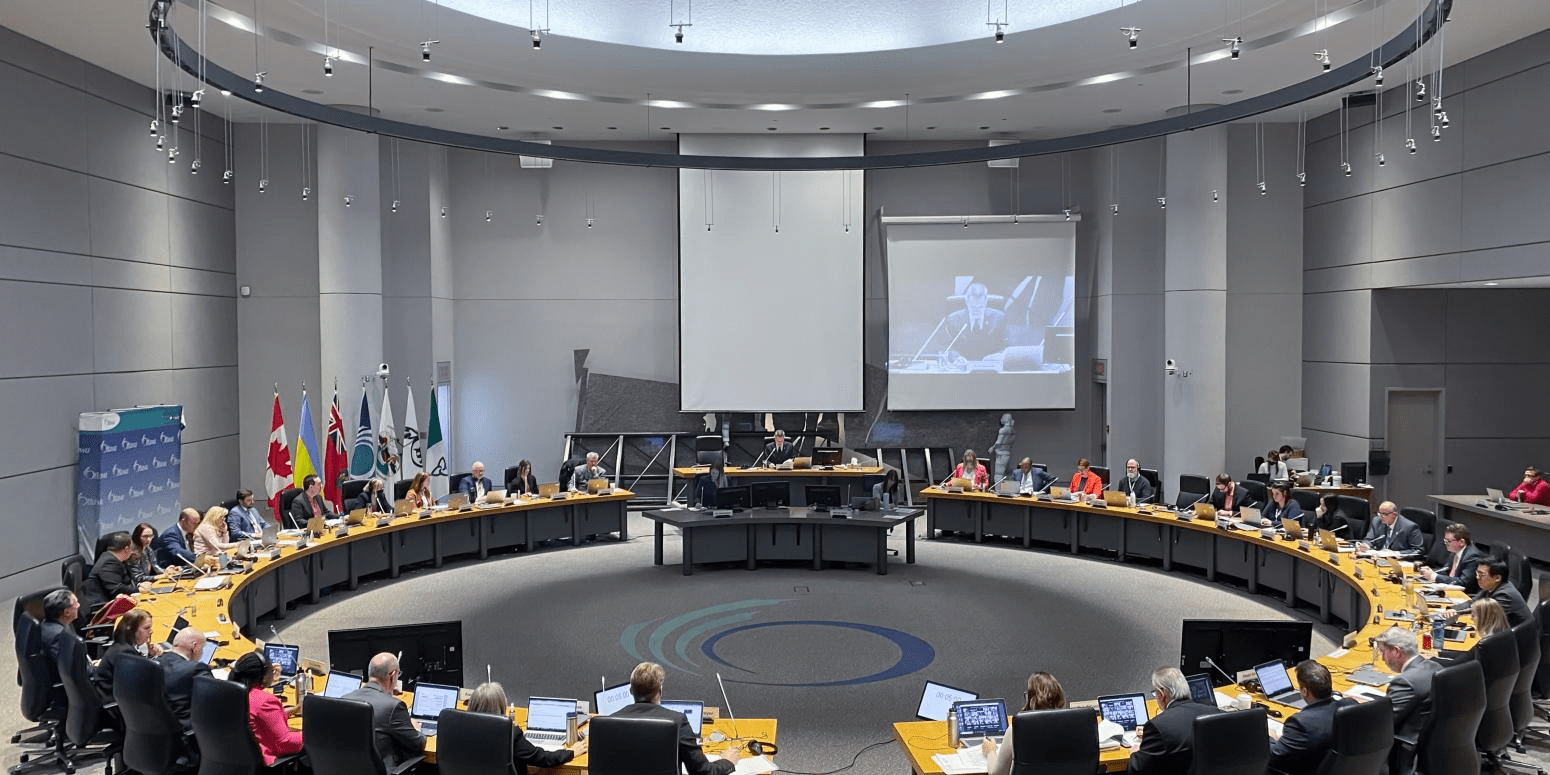
In 1990, the modern wing was built as the headquarters for the former Regional Municipality of Ottawa-Carleton. Inside, it houses the council chamber, a large atrium, various offices, and public services. The exterior features an open plaza, which is part of Confederation Park across Laurier Avenue. This public space hosts festivals, concerts, and other community events. Key attractions of this plaza include a fountain, a sound sculpture, and an artificial skating rink.
One of the notable features is the Sens Rink of Dreams. In 2013, the Ottawa Senators Foundation funded the construction of this 12,500-square-foot ice rink in front of city hall. Every year, the rink operates from December to March, weather permitting. The area is equipped with high-quality, adjustable LED lighting for nighttime skating. Additionally, the plaza features outdoor speakers, picnic tables, and a changing booth. Residents can rent skates and enjoy refreshments from the BeaverTails pastry stand.
History of the Building
Originally, this location served as a parade ground for the Drill Hall. According to archival records, temporary buildings were constructed during World War II to accommodate military personnel. Despite being intended as temporary structures, they remained for several decades. Eventually, these buildings were demolished to make way for a new city hall and courthouse.
Following the amalgamation of the region and municipalities, the former regional headquarters building was repurposed as the new city hall. Its central location also contributed to its selection.
Former City Hall
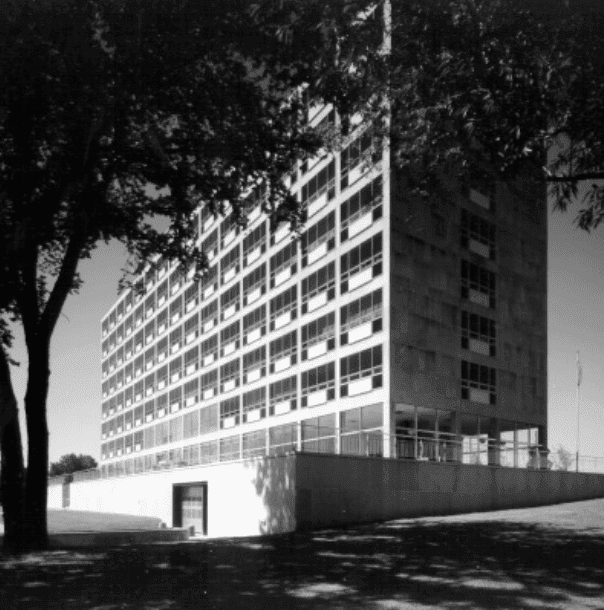
The building known as the John G. Diefenbaker Building was a well-considered choice in terms of architecture and location (east of downtown). In this context, it is relevant to discuss its architectural significance.
The eight-story stone building was designed in the International Style. Its high-quality materials and refined details exemplify the adaptation of the International Style for civic structures in Canada. At a time when the public was moving away from traditional municipal architecture, this modern civic building emerged. The structure continues to serve as a recognizable city landmark, reinforcing the diverse character of government buildings, elite residences, and embassies in New Edinburgh.
The building functioned as Ottawa’s city hall from August 2, 1958, to January 1, 2001. It was later sold to the federal government of Canada in 2003. In September 2011, it was renamed in honour of Canada’s 13th Prime Minister, John Diefenbaker, who served from 1957 to 1963. Diefenbaker is remembered as the only Progressive Conservative leader to win three consecutive elections.
Heritage Building
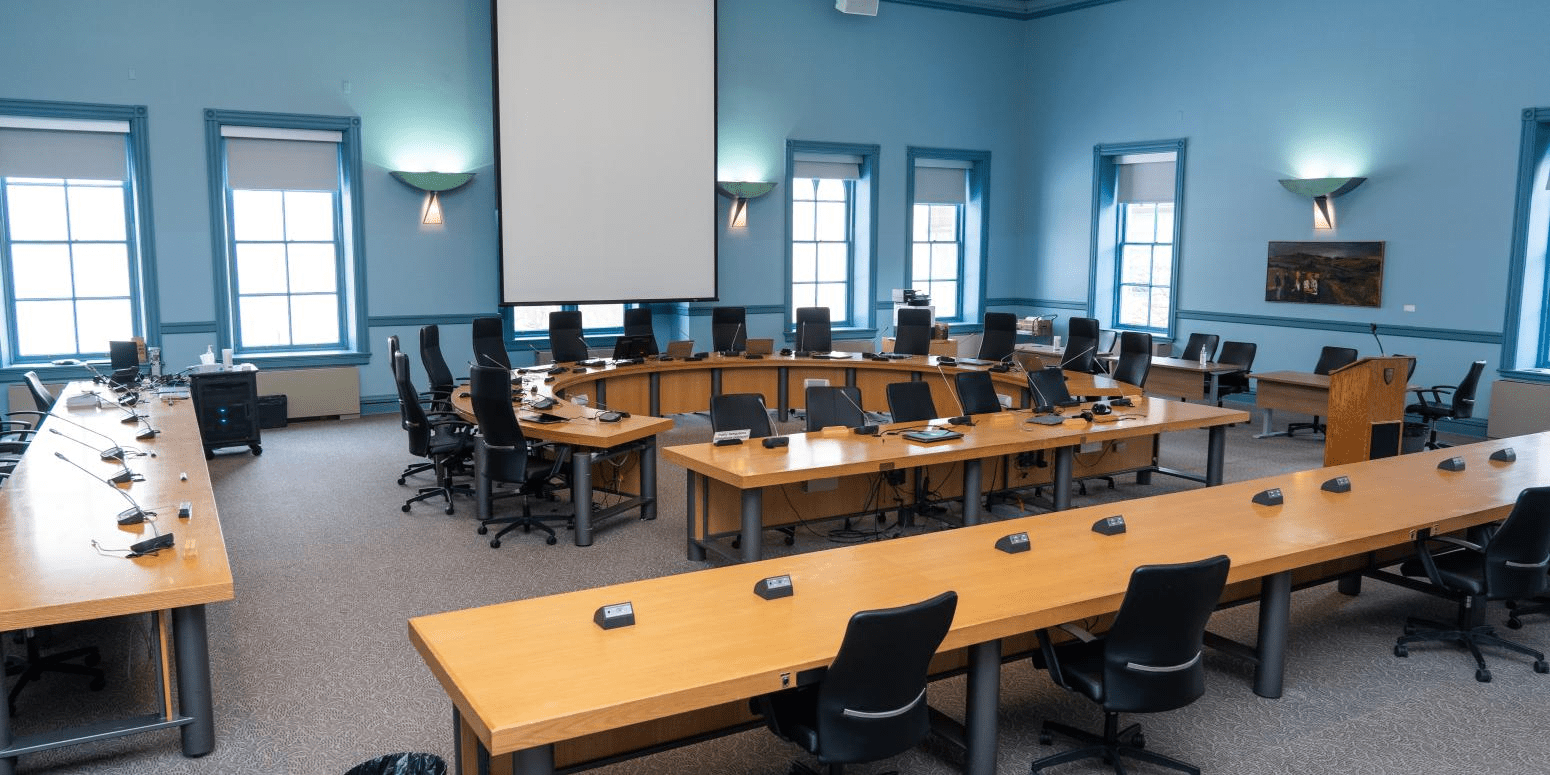
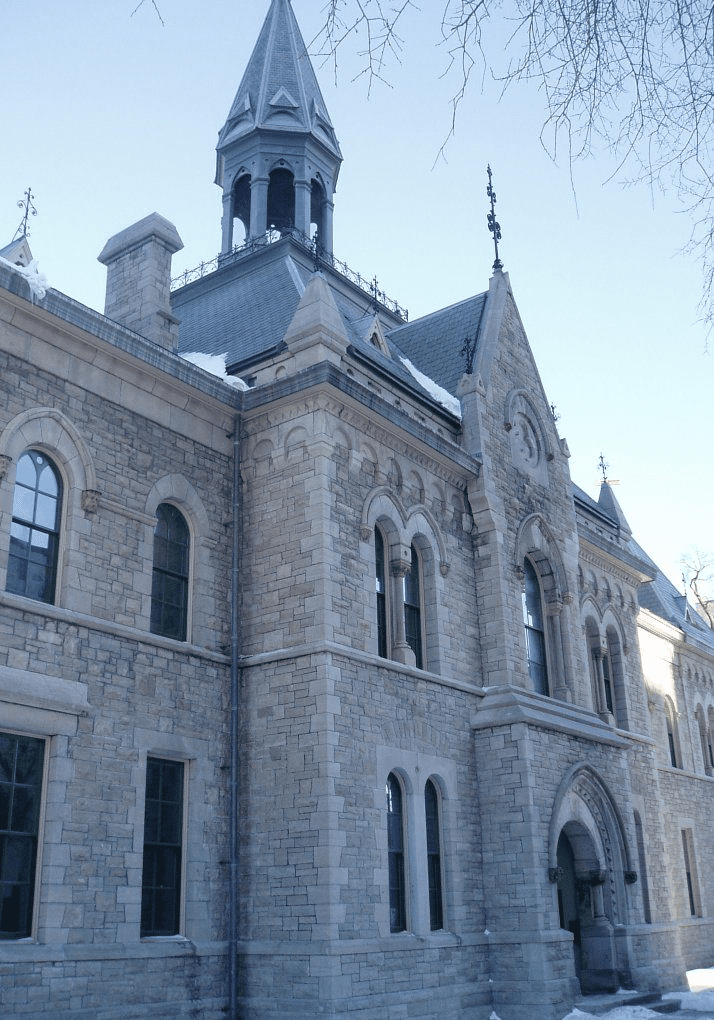
In 1874, the Ottawa Normal School was built and later became part of city hall. This heritage section, connected to the modern wing, now houses the offices of the mayor and city council members. The building was initially used as a teachers’ college. Designed by architect W.R. Strickland and constructed by J. Foran under the supervision of architect James Mather, it was the second institution of its kind in Ontario.
Egerton Ryerson founded the school, and after Ontario’s education system transitioned to a new model, the institution was renamed the Ottawa Teachers’ College in 1953. Notable graduates include Florence Dunlop, a psychologist, educator, and pioneer in special needs education, as well as poet and educator Emily Julian McManus.
In the 1960s, Ontario’s teacher training colleges were integrated into the Faculty of Education at the University of Ottawa. The Ottawa Teachers’ College continued training teachers in Ontario until 1974. Four years later, the building was closed and sold to the federal government.
In 1974, the Heritage Building in Ottawa was designated a National Historic Site of Canada due to its status as an example of Gothic Revival architecture. The building features a variety of architectural details that exemplify the spirit of eclecticism.
In 1986, the Regional Municipality of Ottawa-Carleton acquired the building, making it part of the RMOC headquarters. The site was later renamed the Heritage Building, and in 2000, it officially became part of Ottawa City Hall. Today, with a view of Elgin Street, it houses the mayor’s office.
Veterans’ Grove
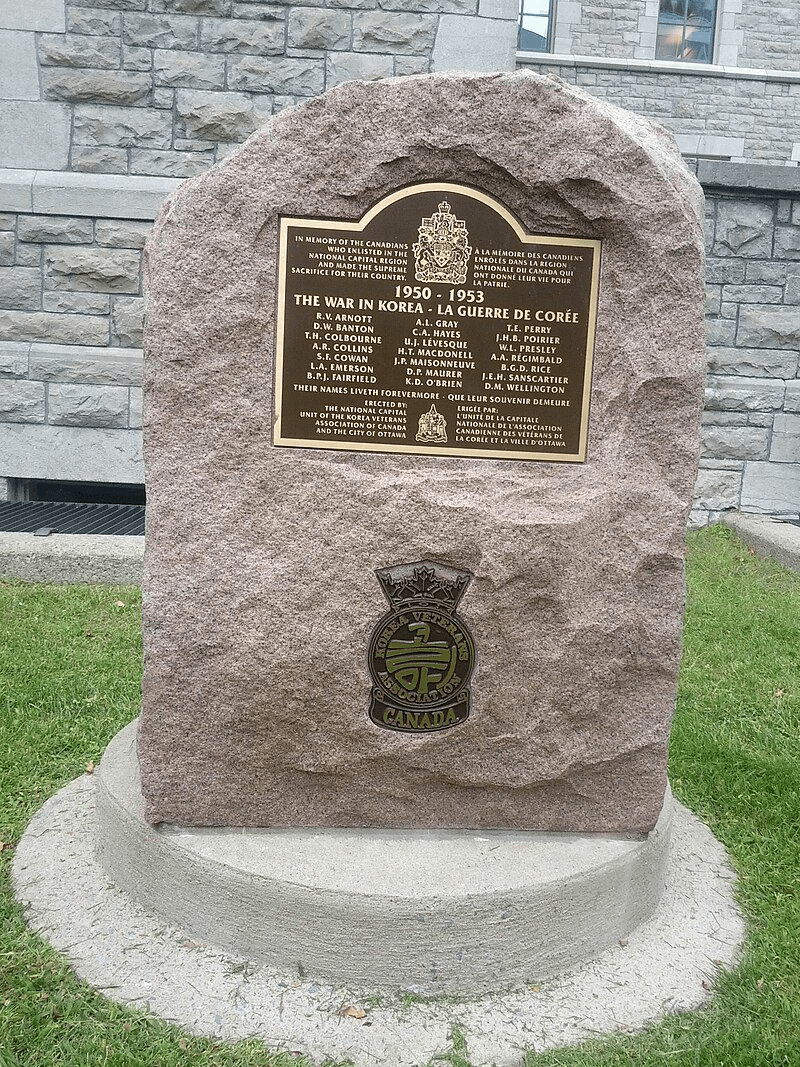
The area adjacent to Ottawa City Hall was officially named Veterans’ Grove on November 5, 1998. Initiated by Bob Chiarelli, the site was dedicated to war veterans from the Ottawa-Carleton region. A pink granite memorial remains on the grounds, commemorating Canadians who enlisted in the Canadian Army Special Forces or served in the Regular Forces. This memorial honours those who made the ultimate sacrifice during the Korean War.
Originally, Veterans’ Grove was inaugurated on July 27, 1994, on Sussex Drive, where the previous city hall was located.
Buildings That Served as Ottawa City Hall
This historical overview provides insight into where municipal decisions were made in the past and where they are made today.
- The first city hall (1849–1877) was a repurposed market building at Queen and Albert Streets, donated by early Bytown landowner Nicholas Sparks.
- The second city hall (1877–1931) was a more modern, durable stone structure built near the first city hall. However, it was destroyed by fire in 1931.
- From 1931 to 1958, a transit building at 10 Rideau Street, featuring a historic neo-Gothic school tower from Chicago, served as Ottawa’s temporary city hall for over 20 years.
- From 1958 to 2000, the John G. Diefenbaker Building on Green Island functioned as Ottawa’s city hall.
After undergoing many transformations, the Heritage Building and Ottawa City Hall were officially designated as the city’s administrative headquarters in 2001. Today, it serves as the executive wing of city hall, housing the mayor’s office and staff. The first floor of the Heritage Building also contains the Ottawa Sports Hall of Fame, showcasing the city’s greatest athletic legends.