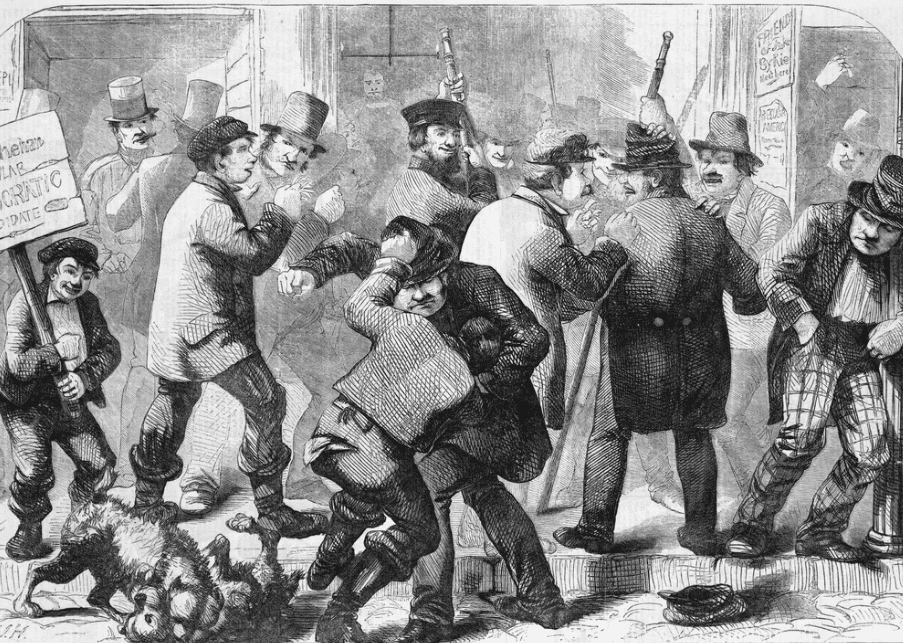

In recent decades, there has been increasing talk of election irregularities and voter fraud. Yet in many cases, there has been no definitive evidence capable of withstanding judicial scrutiny. This prompts us to consider what the first such violations might have looked like. Ottawa Yes explores the history and political context of these early elections.
History of the First Election Violations
Historian James Powell shared a fascinating Ottawa story involving serious violations during a municipal election in Eastview—then a suburban community next to Ottawa. The election in question was surrounded by scandals and pervasive wrongdoing. As a result, one mayor was removed from office by the court, while another was given a suspended sentence, which was later overturned.
Until 1969, Eastview was known as Vanier, Ontario, after which it became part of Ottawa. Historically, it had been a francophone working-class city until it was absorbed by Canada’s capital in 2001. In the early 1980s, 63% of its population spoke French as a first language, but by 2012 that figure had dropped below 40%. The Vanier neighbourhood lies in the former Gloucester suburbs, covers a relatively small area, and has a notably high population density.

What Is Known About Eastview?
In 1908, the communities of Janeville, Clarkstown, and ClandeBoy were merged, resulting in a new village called Eastview, officially recognized as a town in 1913.
During that era, public servants looking to live farther from the city gravitated to Eastview. Later, a significant influx of Franco-Canadians turned Eastview (later Vanier) into the primary francophone area of the nation’s capital.
In the early 1930s, the Great Depression drew considerable attention to Eastview, which became a public forum for national debates on birth control. These debates were part of a court case that lasted from 1936 to 1937. At the time, disseminating any information or materials about contraception was illegal in Canada, in line with Christian beliefs. Dorothea Palmer, a 28-year-old social worker, was arrested for possessing and distributing birth-control materials and pamphlets.
The subsequent trial was successfully appealed, marking an important step in Canadian society’s acceptance of such practices. Notably, Dorothea Palmer was the only individual ever prosecuted for offering city residents information about birth control.
In 1969, the town was renamed in honour of former Governor General Georges Vanier.
The First Municipal Election
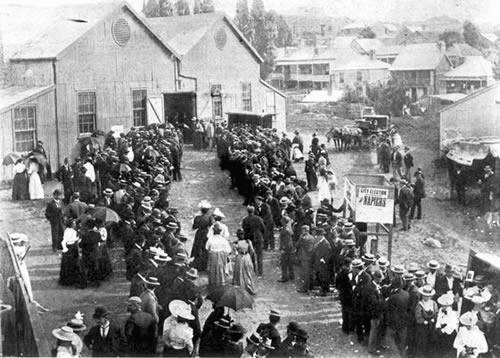
Held on January 5, 1920, in Ontario, these elections were fiercely contested in Eastview. Local newspapers reported the outcome the following day: Mr. J. Herbert (Herb) White was elected mayor, beating the second-place candidate by only 19 votes. White received 428 votes, while his rival, Camille Gladu, received 409. Mr. M. Desaut, finishing third, got 125 votes.
J. Herbert White and Camille Gladu had long been political adversaries in Eastview. Gladu had first served as reeve (a type of local official) before becoming mayor. In the 1916 election, White defeated Gladu by 14 votes.
In 1918, both lost to Dr. Arthur Desrosiers in the 1917 and 1918 elections. In 1919, Camille Gladu returned as mayor.
Following the 1920 election, Gladu claimed that the voting process was marred by serious violations. He alleged that some individuals voted in place of registered voters, and he also mentioned at least one instance of a single voter casting multiple ballots.
Because of the narrow margin and these suspicious circumstances, Camille Gladu called for a judicial recount.
Judge Gunn: How Did the Voting Really Go?
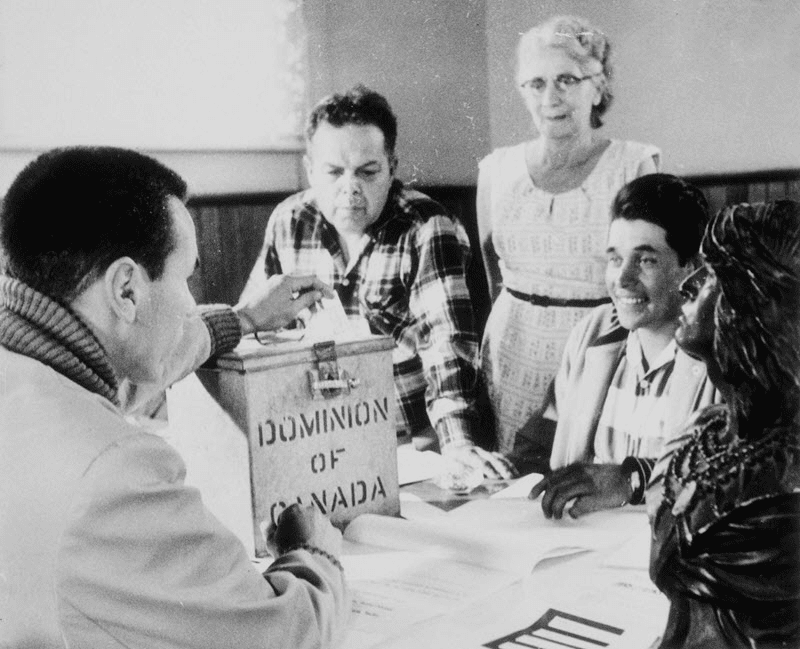
Upon Gladu’s appeal to the court, events moved quickly. Within two weeks, Judge Gunn presided over the opening of six Eastview ballot boxes. He was stunned to find that in four out of six boxes, the ballots were so jumbled that they could not be counted. As a result, the judge did not even attempt a recount.
Judge Gunn described Gladu as a “public benefactor”, someone whose goal was to request a recount and expose election fraud. After delaying the recount, the judge tried to reach an agreement with White and Gladu—either to perform another recount or to hold new elections—but they failed to agree. Gladu then filed a motion to have the election annulled due to false or rigged results.
The Extent of Fraud
A month later, the two opponents reappeared before the judge. During the hearing, about ten sworn statements were submitted. Several were especially revealing:
- Scrutinizing the ballots revealed that H. Joanette, who was already deceased by election day, had “cast” a vote.
- John Brady admitted under oath that he voted five times in exchange for alcohol, which was strictly prohibited at the time. To avoid suspicion, he changed outfits each time, once donning a coachman’s coat to hide his identity during his second visit to the same polling station.
- J.R. Snow of Toronto, who was legally on Eastview’s voter list, was not actually in town on election day. Nevertheless, his vote was recorded for one of the candidates.
- The same happened with R.J. Dougall of Galt, Patrick Finnegan, and D. Daze from Montreal; although none of them were physically present in Eastview, votes were apparently cast in their names.
- Under the 1920 voting rules, individuals owning real estate in Eastview had the right to vote in municipal elections regardless of where they actually lived.
The Third Candidate
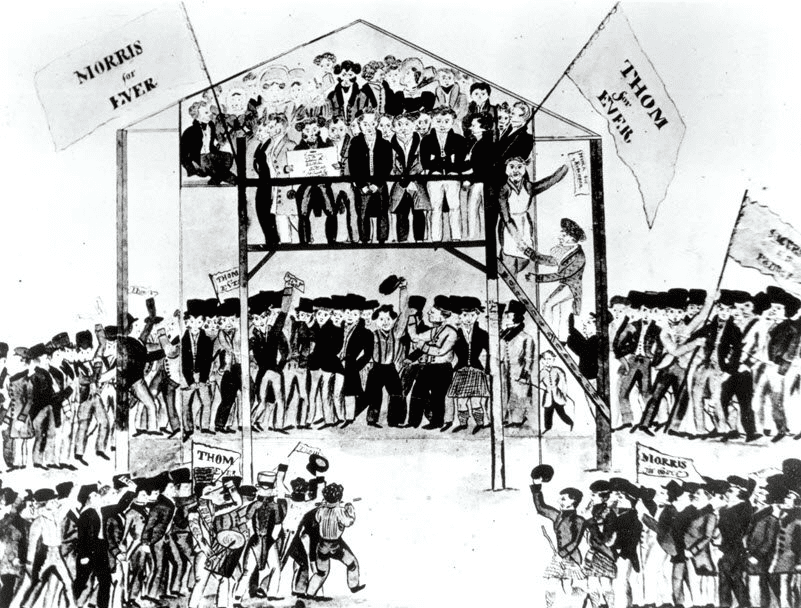
That role fell to Mr. M. Desaut. Allegations surfaced that Mr. White had put Desaut forward specifically to split the votes of francophone electors. This strategy would have favoured White, given that the francophone community outnumbered the anglophone population by roughly 100 votes.
It also came to light that, out of about 900 names on the voter roll, roughly 101 should not have been eligible to vote. Once again, Judge Gunn ordered the opening of all six ballot boxes.
Further investigation revealed that certain polling places were left unattended for a time, as election officers vacated their posts.
Although White was mayor, he denied all accusations, claiming he was unaware of any fraud or irregularities in the voter list and insisting he played no role in distributing alcohol.
The Verdict
During questioning, a man named Guilbeault admitted he had a hostile relationship with Gladu and feared losing his job if Gladu were re-elected. Ultimately, the judge annulled the election results, cancelling White’s victory as mayor. White was not arrested but had to pay court costs. The judge also advised every member of the council to resign voluntarily.
In early May 1920, the case was closed by a representative of the Ontario Supreme Court, rather than Eastview’s local court, following White’s appeal. After that, new elections were scheduled.
Such is the story of one of the first elections and early violations in a small town that later became an Ottawa neighbourhood.