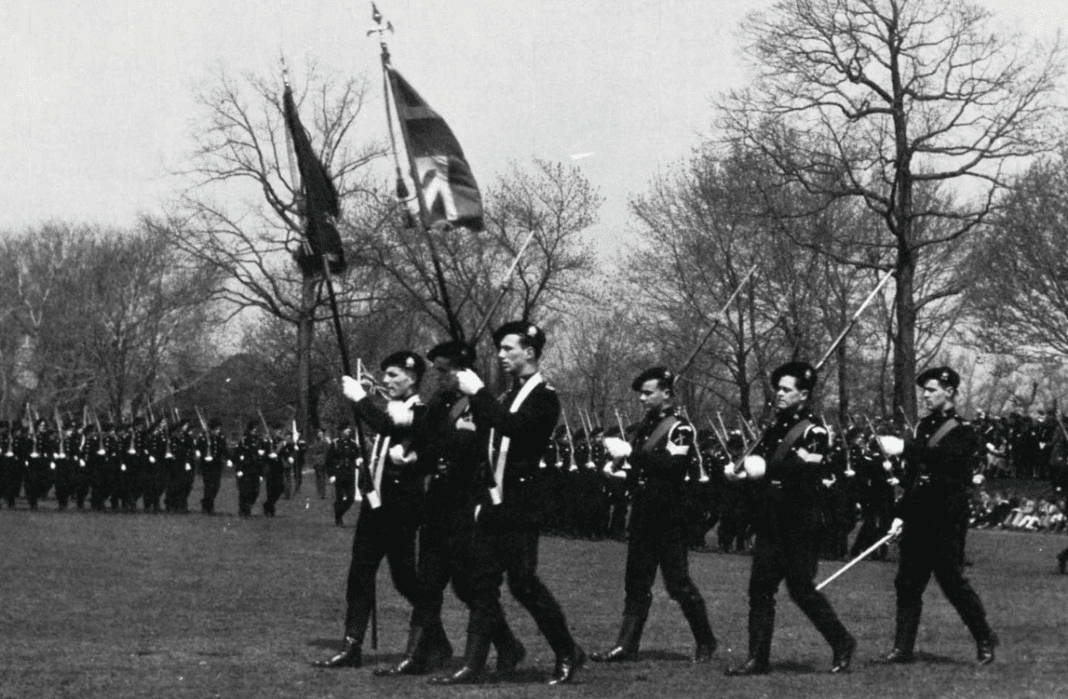

World War II was a series of tragic events that affected many countries and nations. During this difficult time, the people of Canada did not stand idly by. They actively participated in combat operations, striving daily to bring victory over Nazi Germany closer. Notably, even the University of Ottawa introduced a specialized program for the rapid training of military personnel. More on ottawayes.com.
The University of Ottawa During World War II
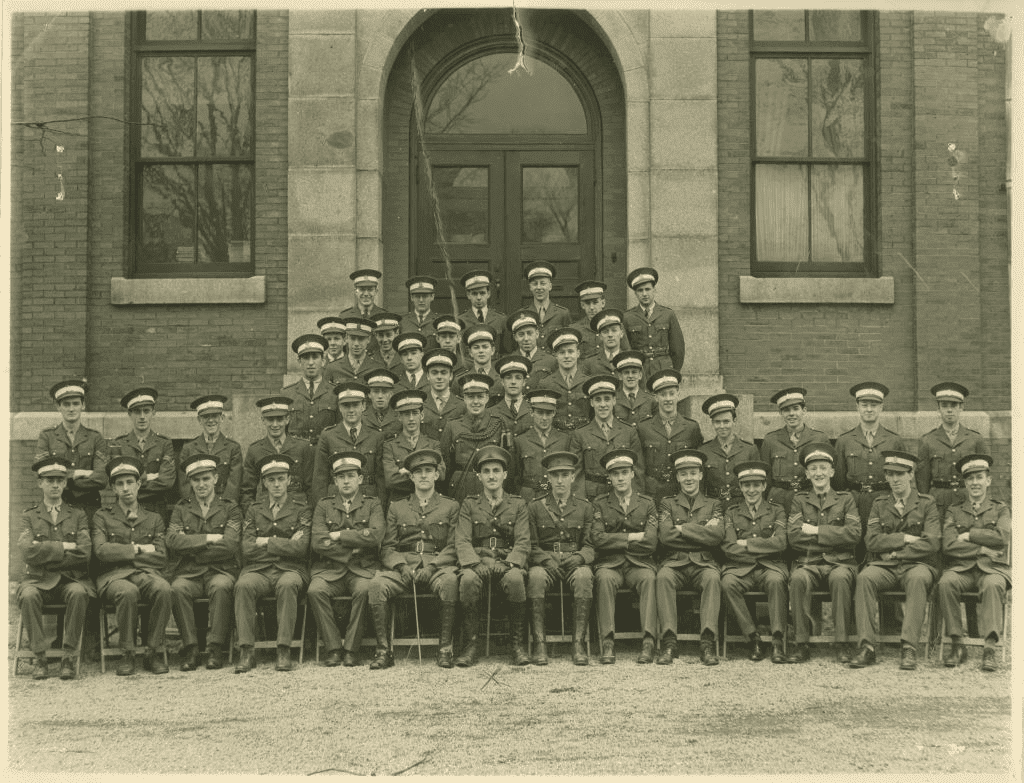
In the fall of 1939, World War II began. Canada also became involved in military operations in Europe, aligning with the United Kingdom, the United States, China, the Soviet Union (from 1941), and other countries in the anti-Hitler coalition. One of the first directives issued by the Canadian government at the onset of the war was that state universities had to contribute to the war effort against the Nazis.
The administration of the University of Ottawa was the first to respond to the government’s directive in 1939. They pledged to do everything possible in the shortest time. In the first months of World War II, the University of Ottawa established the Canadian Officers’ Training Corps. Additionally, the university provided all necessary assistance to students affected by the war’s devastation.
Officer Training in Ottawa
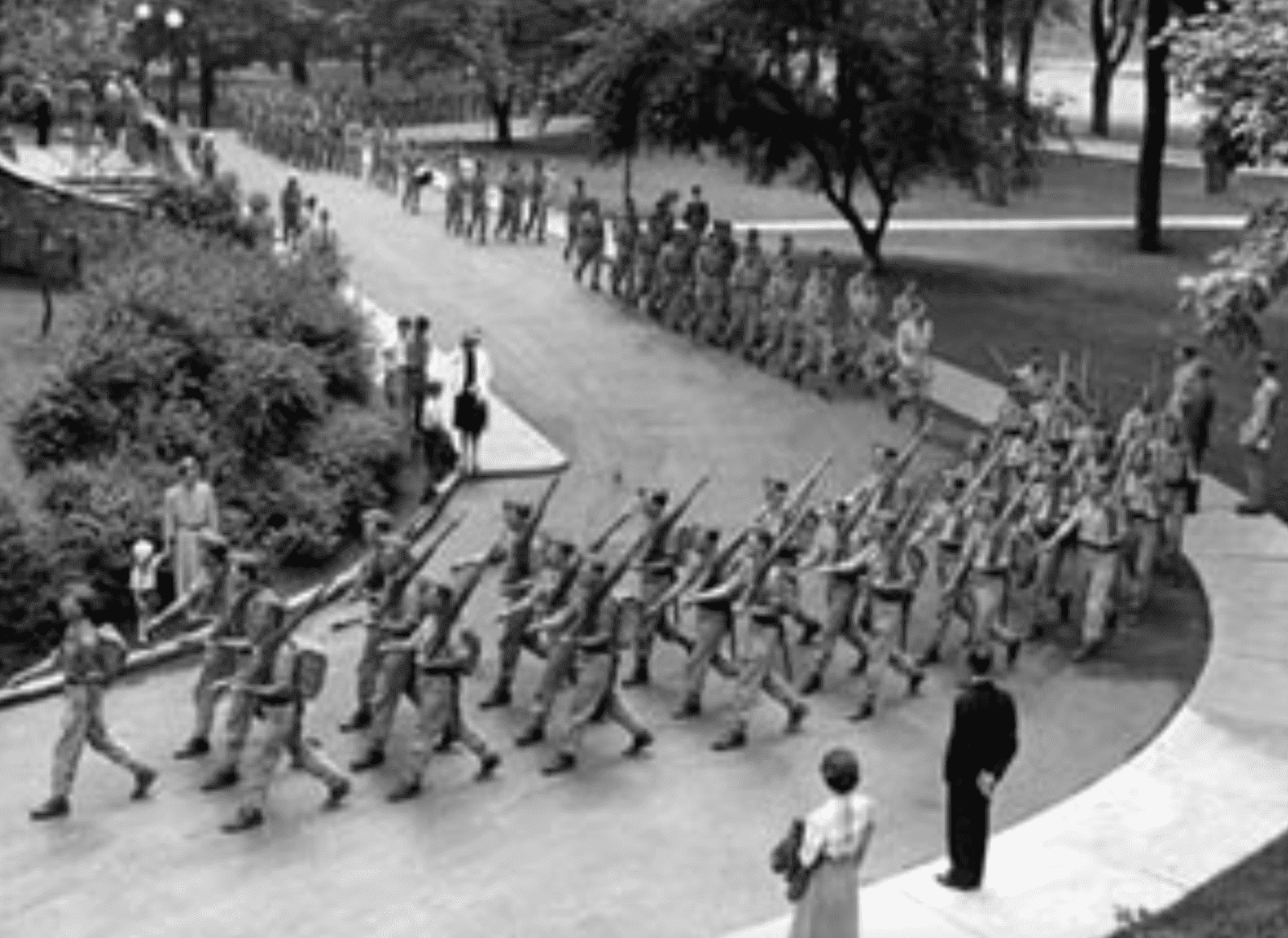
The first recruitment of students into the newly created Officers’ Training Corps at the University of Ottawa took place in the early months of 1940. Over 190 young officers enlisted, ready to fight Nazi Germany to the end. By 1941, the number of new recruits had significantly increased, with over 550 students joining. Most of these students transferred from other Canadian universities rather than enrolling as new cadets.
By the third year of the officer training program, another military training unit was established at the University of Ottawa—the Air Force Officers’ Training Corps. Then, in 1943, a program for training future Navy officers was introduced at the university.
Officer cadets were not sent into battle zones or engaged in combat during their training. They participated in military operations against Nazi Germany only after completing their full officer training course. Furthermore, only individuals aged 18 and older were admitted to officer training programs at the University of Ottawa.
Apart from participating in combat in Europe, other students at the University of Ottawa—enrolled in different fields of study—also contributed to the war effort. Between 1939 and 1941, many students became blood donors, regularly donating blood for wounded soldiers in Ottawa hospitals. Additionally, students actively raised funds to support Ottawa’s military personnel by selling ration books and other goods. The proceeds were sent through student organizations to support captured officers who were alumni of the University of Ottawa.
In 1942, military barracks were built on campus at the University of Ottawa. These were designated for the women of the Canadian Army Corps and had a capacity of up to 400 individuals. After World War II ended, these barracks were repurposed for the expansion of the university’s medical and science faculties. By the 1970s, the old military barracks were demolished.
Between 1940 and 1945, over 1,150 officers graduated from the University of Ottawa’s officer training programs and were deployed to fight in Europe. Many became true heroes, while others never returned home. In total, World War II claimed the lives of over 42,000 Canadians.