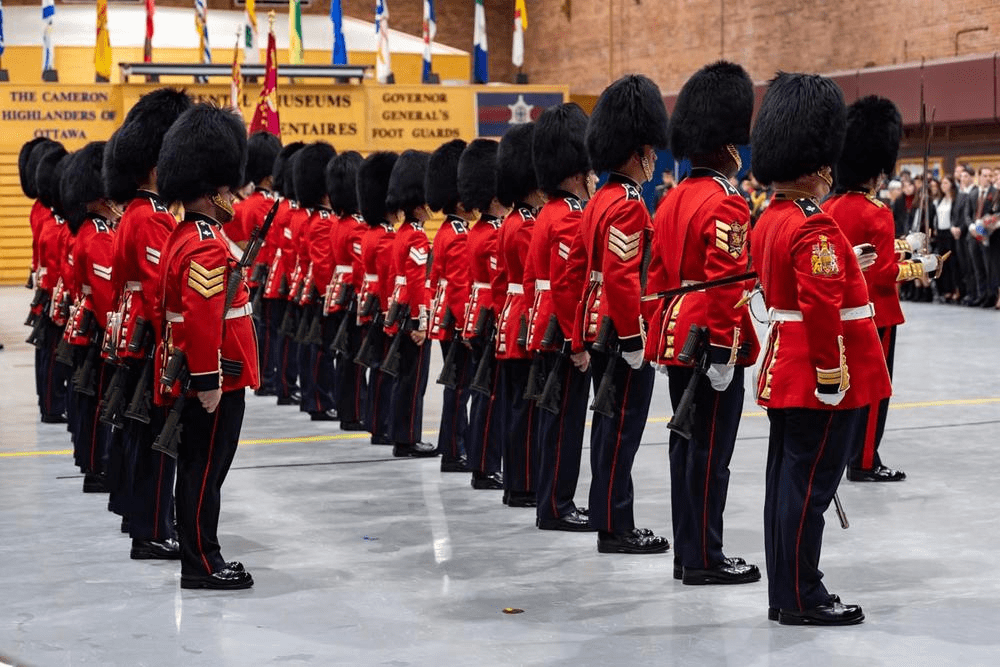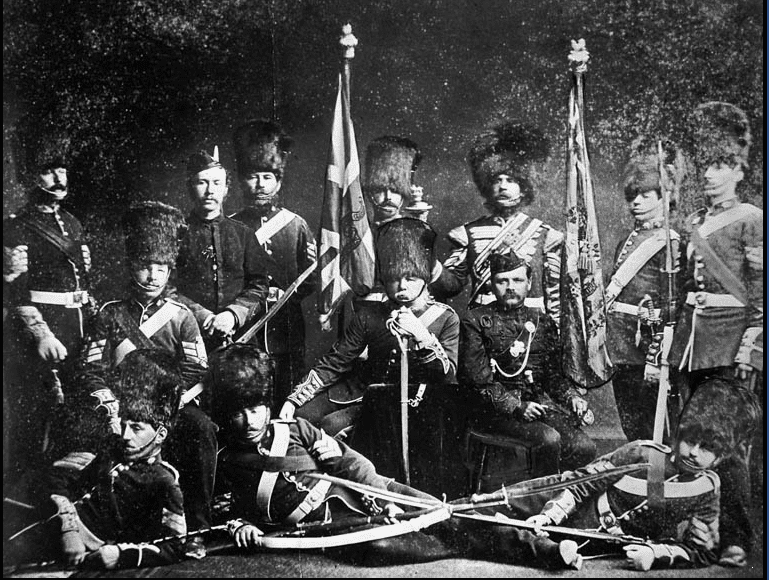

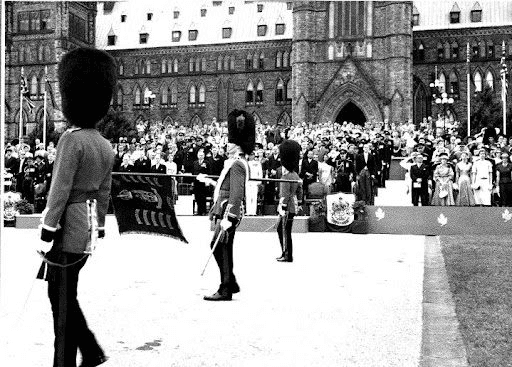
Each summer, an essential highlight of a visit to Ottawa was the ceremonial event known as the “Changing of the Guard.” From June to August, young reservists of the Governor General’s Foot Guards carried out this tradition. Regardless of weather conditions, precisely at 10:00 a.m., the Guards would march to Parliament Hill to relieve the “old” guard stationed in front of the parliamentary buildings. Learn more about this historic tradition with Ottawa Yes.
What is Known About the Foot Guards?
The members of the Governor General’s Foot Guards wore red tunics and bearskin hats, accompanied by a regimental band with pipers and drummers. The Changing of the Guard symbolized military grandeur, impressing bystanders with its ceremonial splendor. The Foot Guards have a long and fascinating history that dates back to the early days of Confederation. Did you know that their origins trace back to the 1860s? This is truly remarkable.
In the 1860s, British North America lacked a regular military presence. By 1855, Britain had begun to gradually withdraw its troops, leaving only two naval bases on the east and west coasts.
The defense of Canada and other British colonies in North America was uncertain, as protection fell to local militia—poorly equipped civilian volunteers who trained for only a few weeks each year at best. In response, one year before Confederation (1866), the government called upon 10,000 volunteers for service. Their estimated term of duty was three weeks annually for three years, with the sole purpose of defending Canada.
The Ottawa Rifle Corps
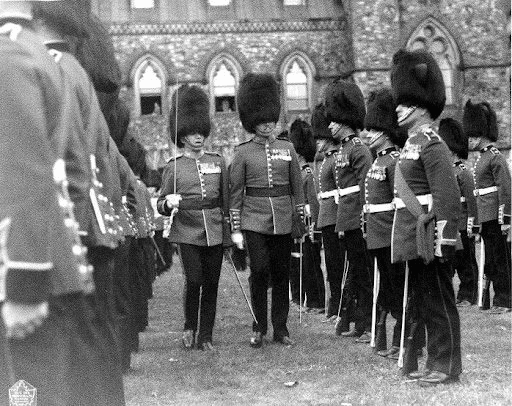
In 1861, a Civil Service Rifle Corps was established in Quebec, comprising volunteer bureaucrats. Following the “Trent Affair,” which nearly led to war between Britain and the United States, the Rifle Corps relocated to Ottawa. At that time, Parliament buildings were newly completed, and civil servants were transferred to the new Canadian capital.
Five years after its founding, the corps evolved into the Civil Service Rifle Regiment. In 1868, the regiment was disbanded. However, two companies of rifle troops became the core of the Governor General’s Foot Guards.
The Role of Thomas Ross
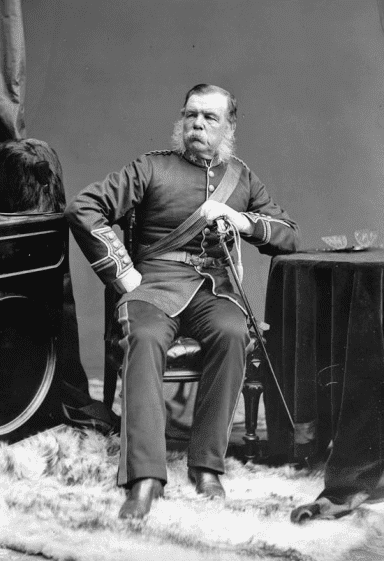
Interestingly, Lieutenant Colonel Thomas Ross is often referred to as the “father” of the Foot Guards. Coming from a military family, Ross had personal experience in service. His career in the public service began as a clerk in the office of the Secretary of Lower Canada. He later became a clerk in the office of the Secretary of the new Province of Canada and, after Confederation, served as Chief Clerk in the Department of the Secretary of State for the Dominion. This diligent and determined career path eventually led him to the Department of Finance.
In 1861, Ross joined the Civil Service Rifle Corps as a private before becoming an officer in the Ottawa Brigade Garrison Artillery. This temporary brigade initially consisted of four and later expanded to seven artillery batteries.
Upon promotion, Ross attained the rank of major and served as the president of the brigade’s orchestral committee due to his deep appreciation for military music.
It was Major Ross who proposed to Sir George-Étienne Cartier, the Minister of Militia and Defence, the idea of forming a volunteer unit in Ottawa, to be called the “Governor General’s Foot Guards.”
Ross justified this proposal with several key points:
- The necessity of a ceremonial unit for state functions.
- The ability of the new formation to provide military music at Government House.
- The Guards’ uniforms would resemble those worn by Queen Victoria’s troops.
The Approval of the Proposal
Just two days after submitting his memorandum, Major Ross received official approval. He was granted full authority to establish the “1st Battalion of the Governor General’s Infantry.”
Following these developments, Ross was promoted to Lieutenant Colonel and appointed commander of the newly formed battalion.
By September 1872, the battalion comprised six companies, along with support personnel. The unit was divided into two half-battalions, each led by a major (the senior major commanding the right half and the junior major leading the left half).
Life in the Foot Guards
- The members of the Foot Guards had no official barracks, and their training sessions took place on the lawn in front of the Parliament buildings at 6:00 p.m.
- The band members trained in the East Block once a week in the evening, and officer meetings were also held there.
- By 1879, the Foot Guards settled at Cartier Square Drill Hall, which was built to accommodate the battalion.
Thomas Ross is recognized as the “father” of the Governor General’s Foot Guards, while Lord Dufferin is often referred to as its “godfather.” The historical reasoning for this is quite fascinating. Upon his arrival in Ottawa, Lord Dufferin took a keen interest in the unit. On May 24, 1874 (Queen Victoria’s birthday), he presented the Foot Guards with their first regimental colours.
Since its establishment in 1872, the Foot Guards have participated in numerous military engagements, earning various battle honours and distinctions.
After World War II, the regiment was restructured as a reserve infantry unit. Its members remain prepared to serve both domestically and, if called upon, overseas.