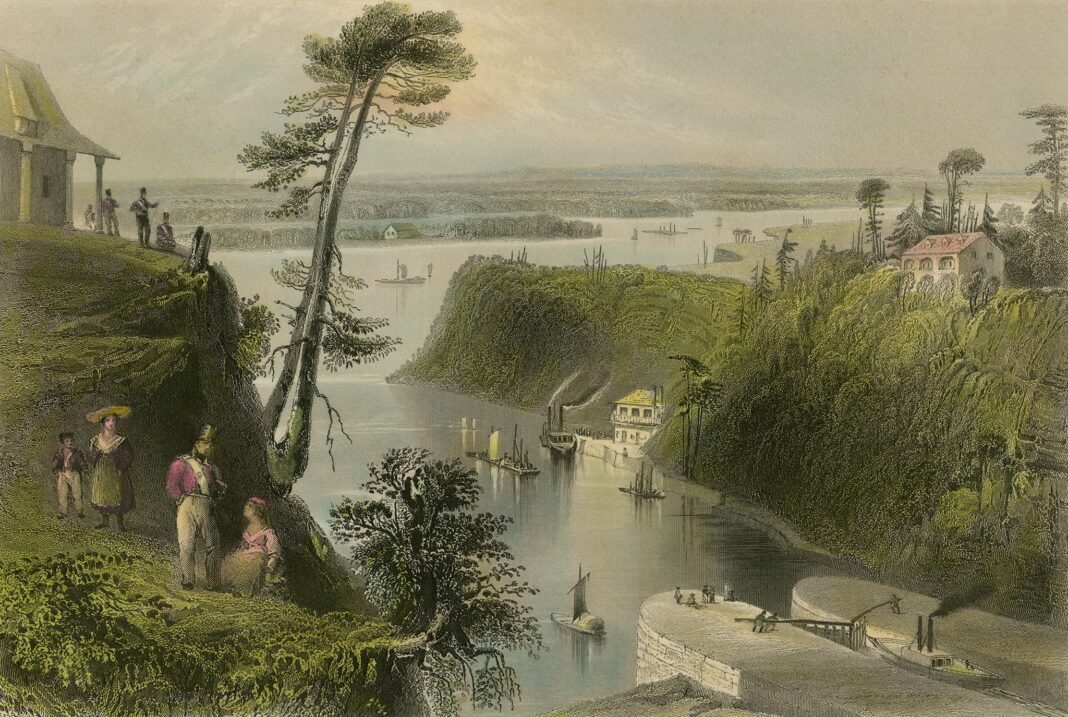

In 1815, James Johnston immigrated to Canada, and by 1827, he had leased property in Bytown. His story as a businessman and political figure is both intriguing and, at times, controversial. Johnston frequently found himself entangled in conflicts, which only fueled ethnic and religious tensions. Read on as Ottawa Yes explores the life and legacy of this remarkable figure.
Who Was James Johnston?
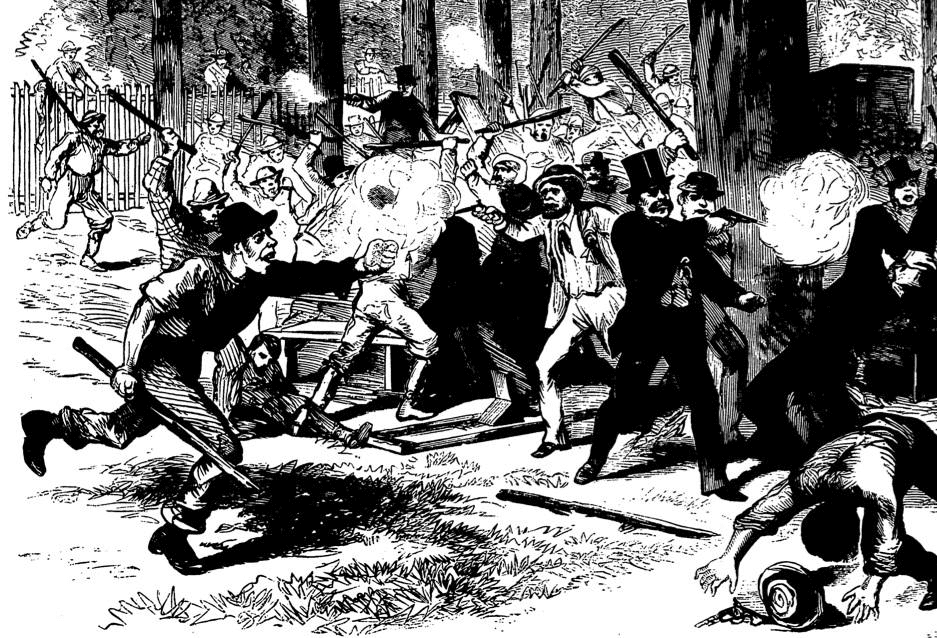
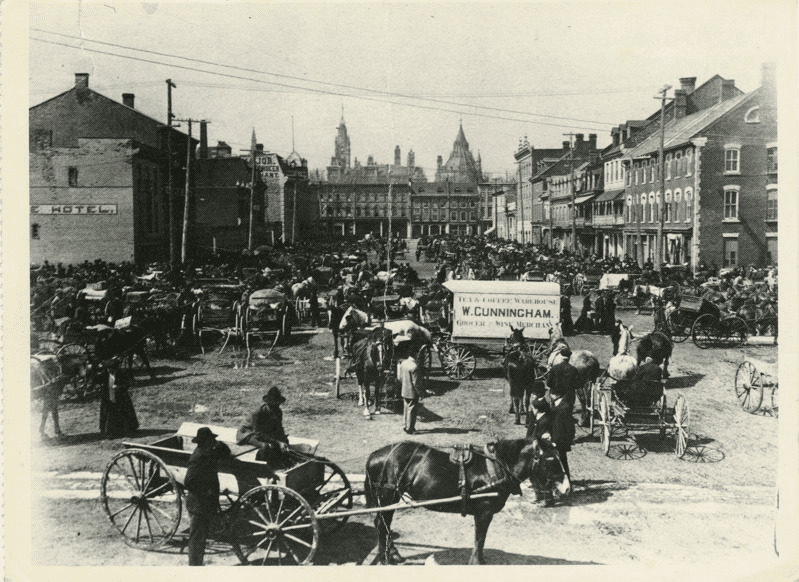
By profession, Johnston was a blacksmith, but in Bytown, he became a merchant and auctioneer, acquiring property and expanding his business. Historical records indicate that he owned substantial land holdings in the young Bytown and surrounding settlements.
Many sources describe Johnston as an aggressive and hot-tempered man, known for his sharp wit and biting satire. His outspoken nature and unwavering directness earned him both loyal supporters and fierce enemies.
Johnston became known in history as a political figure in Upper Canada (later Western Canada, now the province of Ontario).
Civilian-Military Conflict
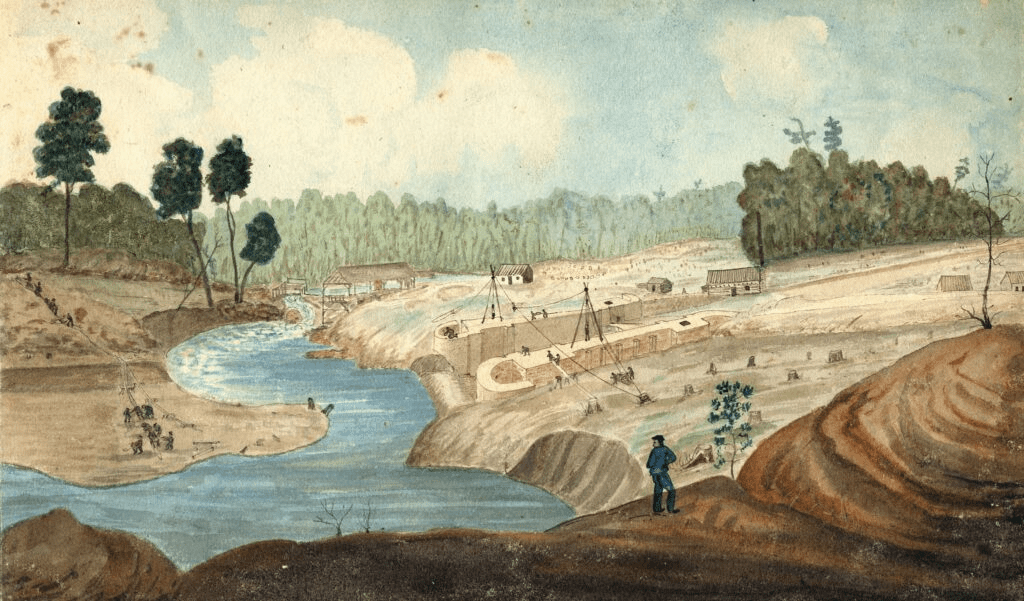
In May 1831, James Johnston and Alexander James Christie were reported to have physically confronted and threatened Joseph N. Hagerman, a military lawyer responsible for overseeing the Rideau Canal. This incident occurred amid rising tensions between the civilian population and military forces. At the time, Hagerman was in court defending a group of soldiers.
Three years later, Johnston, an Irish auctioneer, complained to Lieutenant-Governor Sir John Colborne, alleging that his Scottish rivals, including the well-known Dr. Christie, were plotting against him. Johnston escalated the conflict by accusing the Scottish magistrates of ethnic bias. This complaint was echoed by local Irish magistrate Daniel O’Connor, who also had grievances against the authorities. However, in July 1835, O’Connor dismissed Johnston’s claims as driven by jealousy. Later that year, in October 1835, Johnston’s home was burned down by unidentified individuals.
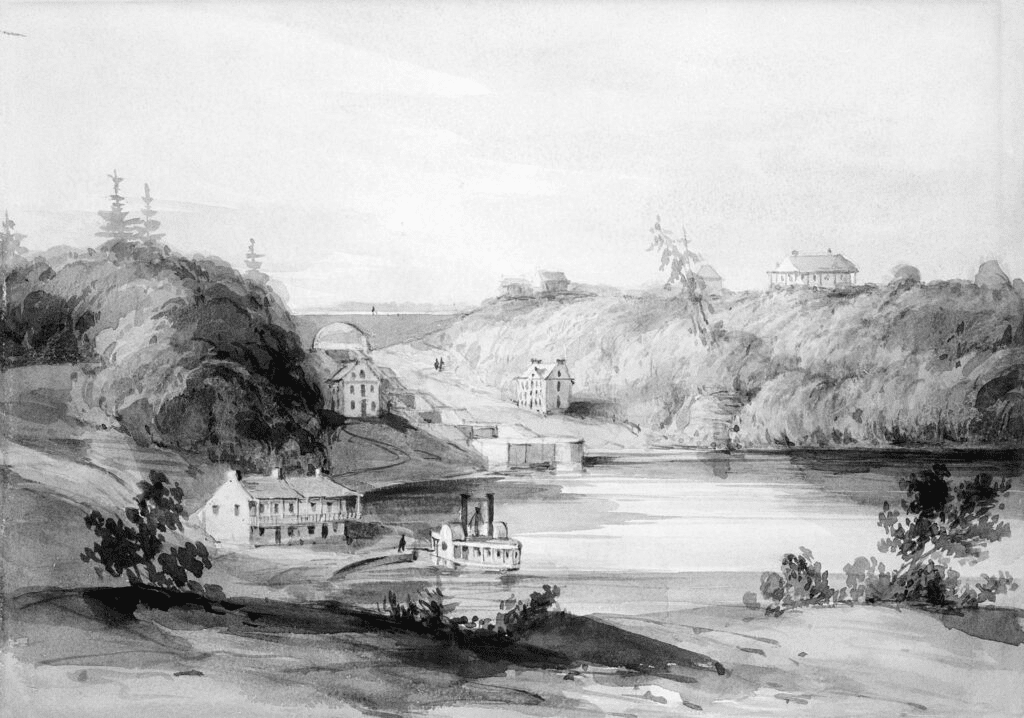
A Brief But Noteworthy Newspaper Career
Though short-lived, Johnston’s newspaper venture is worth mentioning. On February 24, 1836, he published two issues of his newspaper, Bytown Independent and Farmer’s Advocate. A review of these issues provides insights into Johnston’s personality and the issues he cared about most.
He was particularly vocal about the rights of “true Britons” – specifically, Irish settlers and their descendants. Some articles in his paper focused solely on defamation and personal attacks. After just two editions, Johnston sold his printing press to Alexander James Christie. This publication later evolved into Bytown Gazette and Ottawa and Rideau Advertiser, a newspaper that would go on to become Ottawa Citizen in 1851, a name still well known to modern Ottawans.
Brutal Attacks
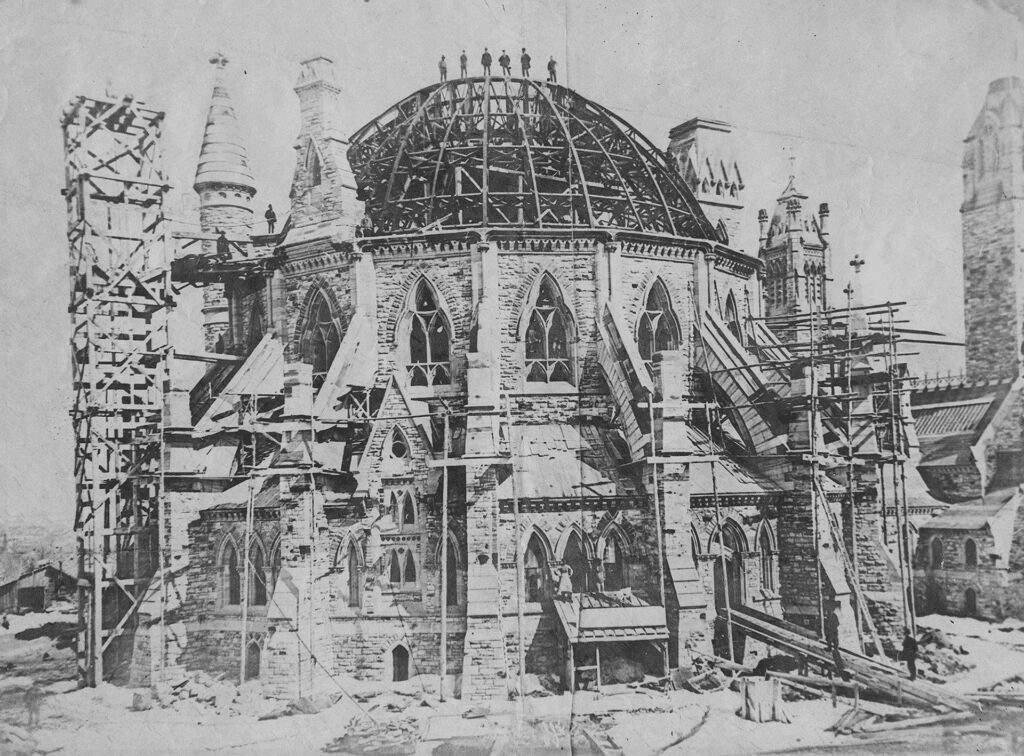
James Johnston’s fiery temperament and aggressive behaviour led to a series of violent attacks against him.
- On January 2, 1837, during a meeting to elect the Nepean Town Council, Johnston and several other men were brutally beaten. It was known that Peter Aylen had instigated the unrest. The cause of the conflict was religious antagonism, which had already led to a rupture in business and political relations between Aylen and Johnston.
- On March 9, 1837, Johnston was attacked by Aylen’s followers, who believed he had played a role in Aylen’s arrest.
- Later that month, another shocking incident occurred. Three lumbermen attempted to kill Johnston as he was crossing Sappers Bridge. He sustained serious but non-fatal injuries. The attackers were arrested and sentenced to three years in prison.
Political Career
Johnston’s political career was as turbulent as his personality. He ran as a reformer in Carleton in 1834 and 1836, but lost both elections. Each time, he challenged the results, alleging fraud, but his protests were dismissed.
In 1836, Johnston lost to Edward Malloch. Their already strained relationship worsened after the defeat. In April 1840, their conflict escalated into a full-blown brawl during a session of the Court of King’s Bench, ending in bloodshed.
However, March 1841 brought Johnston a victory, as he was elected in Carleton after withdrawing from the Bytown race in favour of Stewart Derbyshire. His campaign focused on:
- Exposing abuses committed by the previous assembly;
- Promoting the election of independent politicians, subtly referring to himself;
- Denouncing policies that harmed the timber industry;
- Promising not to be a “servile flatterer of either the government or the people,” unlike his predecessors.
Despite high religious and national tensions, the election in Carleton remained relatively peaceful.
Work in the Department
As an elected official, Johnston actively advocated for the interests of the Ottawa Valley and Bytown, believing the town would one day become the seat of government. He was a frequent speaker, sometimes excessively so, and was recognized as an effective debater. His business acumen and ability to strike at the right moments made him a formidable political force.
Johnston’s political stance reflected his affiliation with the Orange Order. A major fallout with Daniel O’Connor led to his opposition to a bill banning secret societies in late 1843. This did not stop him from winning re-election in 1844 with ease.
Although he had started as a reformer, by the 1840s, Johnston had shifted towards voting as an independent moderate conservative.
His friend and ally, William Dunlop, was a staunch opponent of responsible government. Dunlop resigned from the Assembly to take a position as Superintendent of the Lachine Canal. Johnston soon followed suit, citing government ungratefulness and constant ministerial pressure as his reasons for stepping down.
A Final, Failed Attempt
Johnston made one last attempt to return to politics, running in a by-election in December 1847, but failed once again. Soon after, he was attacked by two bandits on Barrack Hill.
Johnston’s later years were marked by poverty and alcoholism. He was married to a woman named Jane, but even this did not save him from his destructive habits. By the time of his death, the value of his estate had plummeted to just 700 pounds sterling.
Despite his combative nature and numerous conflicts, James Johnston remained a popular figure in Bytown. His funeral attracted the largest crowd ever seen in the town, later renamed Ottawa in 1855. This was yet another testament to the remarkable influence he wielded in life.