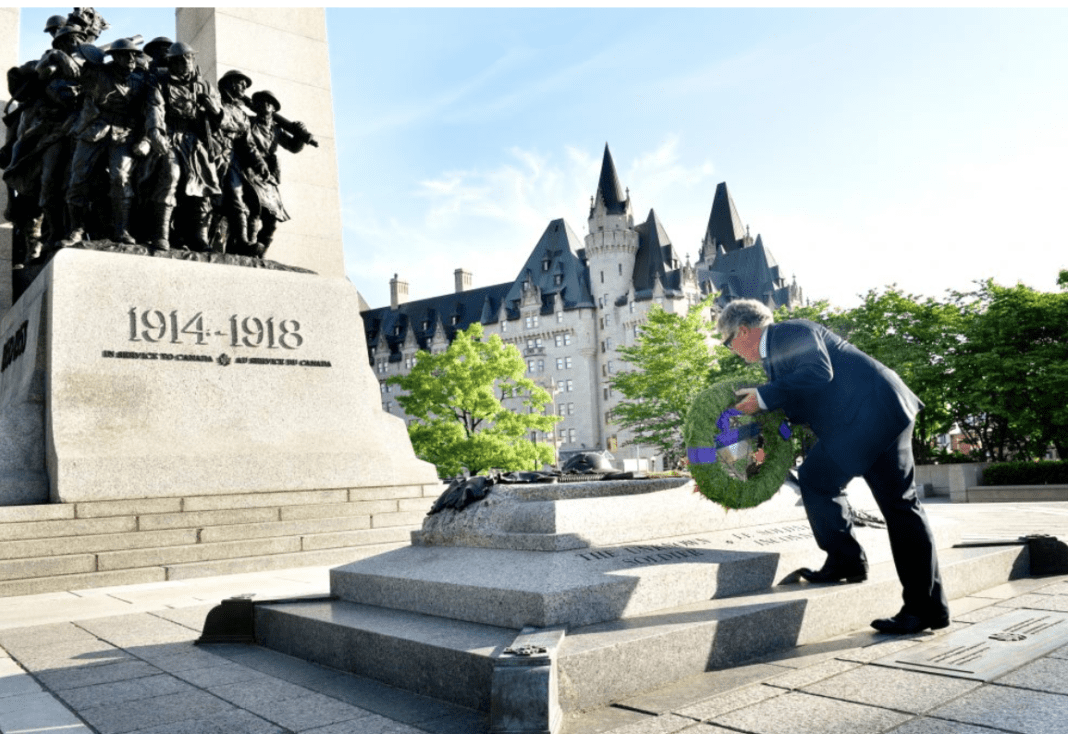

The Tomb of the Unknown Soldier is one of the most significant landmarks in Canada’s capital. It serves as a symbol of remembrance for fallen soldiers, representing those who lost their lives in battle and those who bravely fought in various wars. Many residents of Ottawa and visitors from across Canada gather at this site to honour the memory of those who sacrificed their lives for the country’s freedom. The history of this memorial is particularly intriguing, as the remains of a Canadian soldier were transported directly from a World War I battlefield in France. Read more on ottawayes.com.
The Unknown Soldier
The idea of establishing a military memorial in Ottawa featuring the tomb of an unknown soldier who died in battle emerged in 2000. The Canadian government decided to select one of more than 1,500 graves of unidentified Canadian soldiers in France. The chosen grave was that of an unknown soldier buried in plot E, grave number 7, section 8, at Cabaret-Rouge British Cemetery near Vimy Ridge. This location holds historical significance as one of the major battle sites where four Canadian divisions fought during World War I.
The exhumation of the remains of the Unknown Canadian Soldier took place in the spring of 2000, more than 80 years after his burial. The process was conducted with the highest level of respect and solemnity. A military honour guard was present, and a chaplain oversaw the procedure. The soldier’s remains were carefully removed from the grave and transported to a nearby laboratory for analysis.
Forensic analysis in 2000 determined that the soldier was between 25 and 35 years old at the time of his death. He had suffered severe and fatal injuries to his head and body in battle. Despite extensive efforts and thorough examination, his identity could not be established.
The remains of the Unknown Canadian Soldier were exhumed and transferred from a World War I battlefield in France to Ottawa. Upon arrival in Canada’s capital, the soldier’s body was placed in the Hall of Honour in the Centre Block on Parliament Hill for three days before being reburied at the National War Memorial.
At the original burial site in France, a headstone identical to the other gravestones at Cabaret-Rouge Cemetery was installed over the empty grave. The inscription on the headstone states that the soldier’s remains were exhumed and reinterred with full honours at the National War Memorial in Ottawa.
A Tribute to All Fallen Canadian Soldiers
The National War Memorial and the Tomb of the Unknown Soldier represent not just one individual but all Canadians who courageously fought for their country’s freedom over the years. The tomb is a tribute to the men and women who served in the Canadian Armed Forces throughout the nation’s history. In the 21st century, it continues to remind Canadians that freedom comes at a cost and that many brave individuals paid the ultimate price to secure it for future generations. It is a place where people can reflect on past events and honour the memory of fallen heroes.
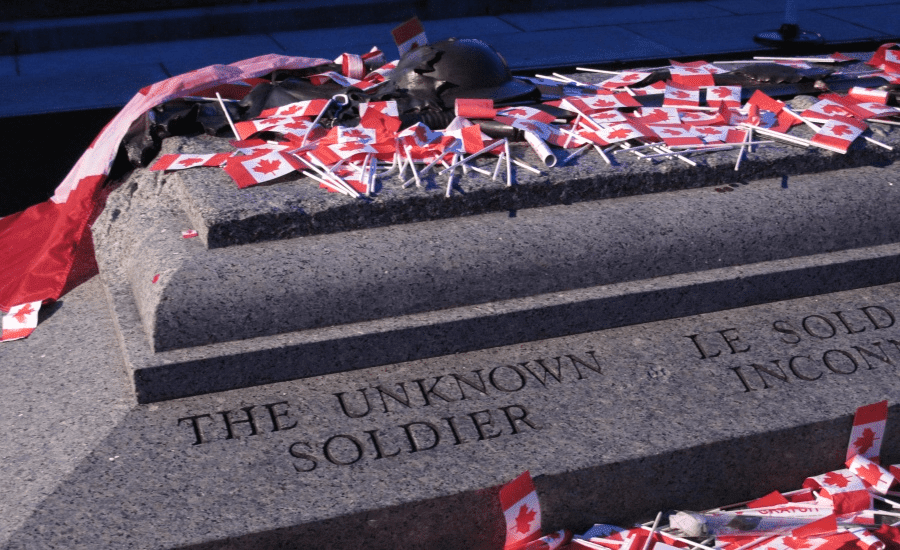
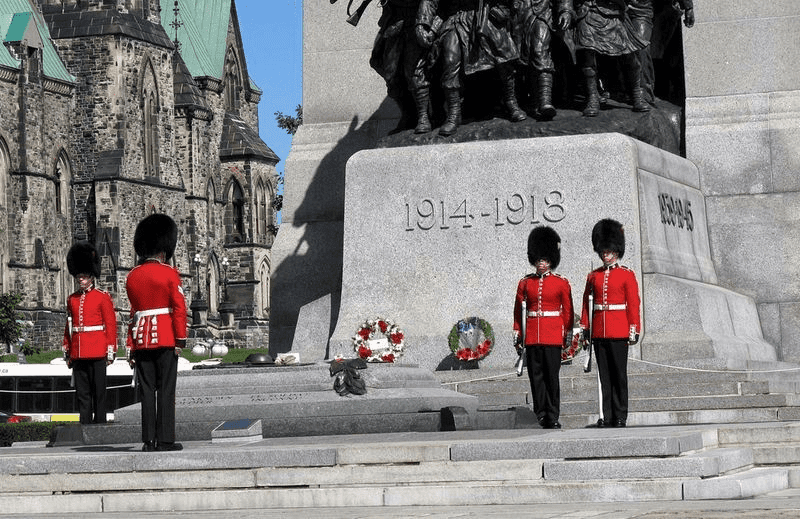
The tomb is located in the heart of Ottawa, next to the National War Memorial. The gravestone is made of granite and bronze, inscribed with the words “Unknown Soldier” and featuring the maple leaf, Canada’s national symbol. The tomb is under constant guard by members of the Canadian Armed Forces, with an honour guard performing a ceremonial changing of the guard several times a day.